05 January 2009

Goodbye

Totally off topic, but I wanted a post to mark the passing of my Grandmother, Kathleen, on the weekend. At 93, my grandmother had lived a marvellous and long life but, having had her around so long, it's hard to believe she won't be there anymore. I just hope she is at peace, as I know she had been fretful and fearful towards the end.

I cherished the relationship I had fostered with her as an adult, and I'm extremely sad to lose her. At least I still have my other grandmother, who is one of my best, and closest friends.

I am unable to attend the funeral, as this will be taking place back in Australia on Friday, but I will be lighting a candle in her honour.

29 December 2008

Sacred Texts

To paraphrase some statements I've read recently:

How does anyone know if story cycles and legends - which generally seem to be medieval, no earlier - can tell us anything much about belief systems that existed prior to Christian, medieval Europe? Aren't they refracted and distorted through the Christian lens? Rely on these texts is dangerous, surely?

There is also a problem with people basing their lives/belief systems on anything for which they have to rely on translation.

One reason to be a pagan is to reject living by any book or dogma. Sure, it's a way of life for others who can't break away from the lure of dogma, being told what to think by a written text or a liturgy. But for others, it has no authority.


And, on a more personal note from one:

I love "The Mabinogion" but I could never live by it, quite apart from the fact I can only ever read it in translation so can only pick up a shadow of what it's actually saying.


My thoughts follow.

Linguists are still making inroads into unravelling the texts, allowing us to see the influences, so I don't consider an inability to read texts in their original language a barrier. Besides which, I don't have the ability to read any of the texts in their original language, nor do I have the means to go to university and study linguistics, history and archaeology in order to confirm/deny for myself the validity of the translations. Then again, I suspect I'm not the only pagan in this position. I imagine a lot of heathens, celtic and brythonic pagans find themselves in the same position. I suppose western buddhists and other non-Christian groups would find themselves with similar dilemnas.


I can understand the statements made in the quotes above. However, there is a wealth of texts relating to stories (which can be traced back, linguistically and historically) prior to their being put in written form. I don't see any reason to dismiss any of them, just because I am unable to read, or listen to them in their original language and/or form. I prefer to seek out those who study the texts and then discern, for myself, what is valid and what is not.

And, what about SPG - does one completely ignore these when examining texts?

In my opinion, the texts are still valuable guides when seeking to verify UPG and, certainly, this seems to have been borne out over the years by various groups working towards a common goal.

That said, I have a lot of reading still to do in relation to myths, legends, folklore, history and languages of the British Isles. Just because my reading list is long doesn't mean to say I base the whole of my beliefs on texts alone. Experience, aligned with the stories in the text, is far more meaningful. Well, let's just say, I'm glad I have the written word to check against, rather than a long line of SPG. It makes my chosen spirital path less about faith and more about belief.

I would be interested to hear the opinions of others as to whether they believe the texts are useful or obsolete in relation to their chosen path.

23 December 2008

Portable Gods

I've seen some interesting questions recently about the use of imported gods in lands where there is already a native tradition. There was some suggestion that the ideas about gods that can transcend place, be exported or borrowed was wholly Christian.

Throughout history people have taken their gods with them whenever they've travelled. Certainly, the Christians are well known for doing this, but what about the norse gods, who appeared to have travelled far and wide, too? In Iceland they seemed to take a firm grip, and they even influenced some of the natives of England and Scotland.

And what about the acquisition of new gods? Didn't the Romans sometimes adopt the local gods when they travelled to new lands in order to gain favour for their endeavours, even incorporating some into their personal pantheon? And wasn't it the Romans who first equated the Greeks gods with their own? I understood archaeology had borne out examples of similar practices here in the British Isles and throughout the former Roman empire. Is it solely a Christian idea: travelling gods?

So, when the Europeans left for America and the other new worlds, did their gods go with them? Or, were they booted back by the local deities? I just wonder, because there are so many modern pagans in the new worlds working with the gods of their ancestral countries. Are they deluding themselves? Are they working with their ancestral gods or the native ones in disguise? Do the gods really travel? Or are they firmly fixed to the landscape?

There was also some question as to the gods recognising those living in foreign lands, mainly why the gods would even bother to acknowledge the descendants of their people, several generations removed? But, if the gods have travelled to new worlds, surely they would be able to identify the descendants of their homelands through the ancestors, who could guide them to their own? Or, do the gods ignore those who would connect with them away from their natural landscape altogether?

I would be interested to read the thoughts of others on these points. As someone who was born in one of the new worlds, I am not sure I could have connected to my gods except on their home ground.

Words and Language

Was perusing various blogs and came across this:

Words are free and all words, light and frothy, firm and
sculpted as they may be, bear the history of their passage from lip to lip over
thousands of years. How they feel to us now tells us whole stories of our
ancestors.

A quote from Mr Stephen Fry, one of Britain’s modern wordsmiths. I’ve always felt language was important and I have always despaired at my lack of ability to wield my native language fluently and with grace.

I wonder, then, what that might say about me to future generations?

22 December 2008

Solstice Sentiments


Hoping everyone enjoyed the solstice. May the New Year bring you good health, wealth and abundant happiness.

11 December 2008

Keeping up with the Christians?


As the Christmas season approaches, I've noticed a lot of discussions surrounding decorations and celebrations by various pagans and my curiousity has been peaked. I notice the same thing occuring around Easter and, best of all, people referring to Samhain as the Celtic New Year.

Why do so many pagans feel the need to find/invent a festival to co-incide with those of the Christian/secular calendar?

Is there something lacking in those provided by their own tradition?

Why do so many pagans feel the need to adopt the festivals from all the traditions?

Personally, I don't do Christmas or Easter and my new year is not at Samhain [whole other argument which falls outside the remit of this post]. I realise that the northern traditions have feast days such as Ostara and Yule, and the Romans celebrated Saturnalia on 17 December, but these are outside of my personal belief system, so I don't acknowledge them. I am happy with my four fire festivals and two solstices (which are acknowledged on a purely personal level) and don't feel the need to join in the celebrations of others. It feels complete to me.

So, why do so many feel these are not enough, incorporating the Christian and secular holidays in their year? Why try to blend the Christian/secular celebrations with a pagan one?

All this and then there are the rather confused local councils who go around changing things from Christmas to winter festivals so as to not offend non-Christians. As a non-Christian, I object to council's doing this. Why? Because I live in (what I thought was) a Christian country, so I expect to see people freely practising their religion and celebrating it. Seeing the councils change things actually makes me wary about the ability of the citizens to celebrate any religion openly, including paganism.

Anyways, back to the topic. If you are someone who incorporates an eclectic mix of festivals from various pagan faiths into your calendar, may I be so bold as to ask why?

This post is rather convaluted, but I find the whole idea rather confusing. So, forgive me if I come back and edit it at some point.

08 December 2008

Desperate?

"Nobody loves me,
everybody hates me,
think I'll eat some worms!"


That's how I feel. I've been on those pagan dating sites for a while now, and I've sent out messages to several members, more than a few, actually. The response has been ... underwhelming. I have received no responses to any of those messages; not one male has had the courtesy to even acknowledge my post/presence. I feel like the least attractive pagan female in the English speaking world right now. The only serious interest came unprompted from someone 18 years my junior, and even he dropped off a few months ago, though there may be a serious, valid reason for his disappearance from the site.

There are stories about couples finding each other on these sites, some members even writing in their profiles they're not looking anymore because they've found someone. So, it must happen.


I may have to resign myself to the fact I just don't fit into the pagan female mould that men seek. Certainly, my profile differs from that of the other women who frequent these sites - see my post "Stereotyping" for elucidation. I must admit I am a lot older than most of the other females, too. Perhaps I've left it too late in life to look? Perhaps the gods have other plans for me? Wouldn't be surprised.

In the meantime, if you're a single, heterosexual, pagan male, resident anywhere in the British Isles, who can relate to what I write here at my online journal, you'll find me at the bottom of the garden ~ munching on worms.

"Nobody loves me,
everybody hates me,
think I'll eat some worms!
"

05 December 2008

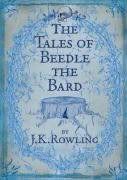
The Tales of Beedle the Bard


Author: J.K. Rowling
ISBN: 9780747599876

Have just read it tonight, having received in the post this evening. I liked it. It reminded me of the fairy tales of my childhood, of which I still have very fond memories and, occasionally, still read from time to time. “The Fountain of Fair Fortune” is currently my favourite, but that may change over the course of several readings.

I like the drawings Rowling has done to accompany the tales, as the remind me of those I had in my big book of fairy tales as a child; only one or two black and white pencil drawings for each tale - perfect. The writing is simple, easy to understand and lends itself well to reading out loud. Fantastic bed time stories, even the scary one.

I thought I recognised shades of other stories in the tales, but, overall, I believe they are original, given the main characters all work magic, rather than the magical characters acting as mere catalysts in conventional folk stories.

Unusually, I had only two problems with this wonderful, little, blue, hardback book: the notes from Dumbledore on the morals in each tale and the footnotes within those.

If you wanted to read fairy tales to a child, you would just read them to your child, who would absorb the lesson without realising it, and, though its possible with this book to do that, if you try to flick past the pages of notes, I’m sure a child will pipe up that your missing bits of the story. Whereas the tales are simply written, like all good fairty tales, the notes are not, as JK has given them the air of Dumbledore rendering them a bit academic in tone, which I think makes them uninteresting to the very young.

Still, its a well designed book and, if were I to win the lottery, I’d try to buy the leatherbound version as a family treasure; just as I have kept the large volume of fairy tales I was given in childhood.

One of the best things about the book is that £1.61 from every copy will go to the Children’s High Level Group - a charity. Even without that, its worth buying.

Rating: 4½/5.