

The Bealtine Edition of the PPP is now up!
We have fabulous poetry and the results of our Pagan Paeans Poetry competition. Sign up as a member to read new poems, give feedback and join in debates.
15 May 2009
The Bealltainn Edition of the Pagan Poetry Pages

Survey: Religious Experience Amongst Followers of Nature-Based Traditions
For hundreds of years, individuals who experience unusual phenomena have, in the main, found such to bring more challenges than opportunities. Indeed, for many, it was the source of great suffering; from those tortured by inquisitors, to those who were locked in the halls of hospitals such as Bedlam, people who saw heard, or felt things not perceived by the majority were considered evil, or insane. Even today, people who have religious experiences are cautious when sharing such with others. Fears that they will be thought to be psychologically abnormal –crazy or even just ‘not quite the full quid’ keep many quiet about what are often interesting and possibly meaningful experiences.
Yet, for as long as humans have existed, there have been reports of such experiences. From those practicing the Shamanic traditions of ancient cultures through to those who employ the magical techniques of emerging civilizations, to those engage in mysticism, many individuals, who appear fully integrated members of their society or culture, have had experiences that are considered to fall outside of the range of that which is normal. However, if such is indeed a recurring aspect of human experience, it must be asked whether such experiences are truly abnormal, or whether they are expressive of a ‘normal’ dimension of within human personality.
Investigations into the psychology of religion have been looking at questions like these, trying to understand the psychology of religion. Associations with particular personality traits, as well as with particular forms creativity have been found, and questions have been raised as to whether what appear to be unusual religious experiences have been properly considered in the past. However, while many of these studies have looked at the experiences of people in mainstream religions, the experiences of people who identify with smaller, or less recognized religious groupings have not been well considered. This is unfortunate, because unless religious experience can be shown to be something that transcends the boundaries of particular religions, the question of whether it is part of normal human experience cannot be answered. Indeed, as long as religiosity is only considered as part of the paradigm of the established religions, it will only ever been seen through their eyes.
As part of attempts to diversify understanding, Dr. Tiliopoulos and myself (Caroline Fielden), from The University of Sydney, Australia are conducting research into the relationship between religious experience and particular aspects of personality. In particular we are looking for feedback from those who identify with nature-based religions – this being a community whose voice has yet to be properly heard in this type of research. We are hoping that such will reveal a clearer idea of what religiosity is, and what it means for our understanding of what it is to be human. To this end, we invite you to give expression to your experience, to complete this survey, which will be running for only a limited period of time. Please also feel free to pass on this survey, as the more respondents we have, the better. We thank you for your help, and if you have any questions, please don’t hesitate to contact Caroline at cfie7276 @ usyd.edu.au, or Dr. Tiliopoulos at nikot @ psychusyd.edu.au.
For those who wish to complete the survey follow the link below and simply answer the questions to the best of your ability. The survey should 5-10 minutes to complete.
CLICK HERE
Yet, for as long as humans have existed, there have been reports of such experiences. From those practicing the Shamanic traditions of ancient cultures through to those who employ the magical techniques of emerging civilizations, to those engage in mysticism, many individuals, who appear fully integrated members of their society or culture, have had experiences that are considered to fall outside of the range of that which is normal. However, if such is indeed a recurring aspect of human experience, it must be asked whether such experiences are truly abnormal, or whether they are expressive of a ‘normal’ dimension of within human personality.
Investigations into the psychology of religion have been looking at questions like these, trying to understand the psychology of religion. Associations with particular personality traits, as well as with particular forms creativity have been found, and questions have been raised as to whether what appear to be unusual religious experiences have been properly considered in the past. However, while many of these studies have looked at the experiences of people in mainstream religions, the experiences of people who identify with smaller, or less recognized religious groupings have not been well considered. This is unfortunate, because unless religious experience can be shown to be something that transcends the boundaries of particular religions, the question of whether it is part of normal human experience cannot be answered. Indeed, as long as religiosity is only considered as part of the paradigm of the established religions, it will only ever been seen through their eyes.
As part of attempts to diversify understanding, Dr. Tiliopoulos and myself (Caroline Fielden), from The University of Sydney, Australia are conducting research into the relationship between religious experience and particular aspects of personality. In particular we are looking for feedback from those who identify with nature-based religions – this being a community whose voice has yet to be properly heard in this type of research. We are hoping that such will reveal a clearer idea of what religiosity is, and what it means for our understanding of what it is to be human. To this end, we invite you to give expression to your experience, to complete this survey, which will be running for only a limited period of time. Please also feel free to pass on this survey, as the more respondents we have, the better. We thank you for your help, and if you have any questions, please don’t hesitate to contact Caroline at cfie7276 @ usyd.edu.au, or Dr. Tiliopoulos at nikot @ psychusyd.edu.au.
For those who wish to complete the survey follow the link below and simply answer the questions to the best of your ability. The survey should 5-10 minutes to complete.
CLICK HERE
12 May 2009
What I Believe ... continued
Further to my post of 18 February 2009, "What I Believe", I have considered other people's ideas and am now able to add to my list:
I believe in:
I believe in:
- the pre-Christian gods of the British Isles;
- genius loci, i.e. spirits of place and/or landscape;
- animism, i.e. spirits in plants, animals and some objects scientist might deign inanimate;
ancestor worship; - an energy, or force that permeates everything, though I am unsure as to its source (it could be the gods, or perhaps they are a part of it, like us);
- the effectiveness of magic and/or witchcraft, i.e. the ability of humans to source and utilise that energy and/or force;
- the ability to craft magic is unconnected with religious beliefs;
- crafting magic is a gift, in the blood, not a skill anyone can harness;
- the connectiveness of all, not unlike the heathen Web of Wyrd;
- the gods are separate from us, external, not something we project;
- (most of) the gods/goddesses are separate individuals and not aspects of just one;
- the gods are superior to us in some ways, mostly their ability to wield power/magic/energy;
- the gods are fallible, just like us;
- there are planes of existence other than this one, and they touch at certain points, even interact, with ours;
- it is possible to know the non-human denizens of the Otherworlds, such as the Sidhe and other beings, and that we can communicate with them.
08 May 2009
Trip to the Outer Hebrides
I am in a bit of a bind. I had pre-booked, and paid for a trip to the Outer Hebrides with Megalithic Tours for August this year. Then one of my close family members decides to have a "secret wedding" in September and they tell me so that I can arrange to attend the celebrations in Australia.
Wonderful.
Except ... I don't have enough holiday time left with work to travel to Australia and back, and the tour company had already booked and paid for the tour the week before I needed to cancel. I desperately need just one person to book a place on the Hebridean and Highlands tour in August. Unfortunately, it appears that bookings are down this year, so I am doing my utmost to promote the company, Megalithic Tours and the tours, wherein passengers visit ancient, mystical and historical sites.
Wonderful.
Except ... I don't have enough holiday time left with work to travel to Australia and back, and the tour company had already booked and paid for the tour the week before I needed to cancel. I desperately need just one person to book a place on the Hebridean and Highlands tour in August. Unfortunately, it appears that bookings are down this year, so I am doing my utmost to promote the company, Megalithic Tours and the tours, wherein passengers visit ancient, mystical and historical sites.
I travelled with Megalithic Tours just last year,  to the Orkney and Shetland islands and it was a fabulous trip. There is only ever 11 people travelling on the bus, the accommodation was marvellous and Neil, the guide, made everything go so smoothly and he was very flexible, allowing for the interests of the passengers. I simply cannot recommend Megalithic Tours enough, and that is why I had pre-booked this year's tour on the last day of our trip. I intend to travel with Megalithic Tours for the next couple of years as its exactly what I want in a tour - interesting, fun, reasonably priced (very good value for money), and easy. Its just a shame I have to bow out of this year's trip (and I was sooo looking forward to it).
 to the Orkney and Shetland islands and it was a fabulous trip. There is only ever 11 people travelling on the bus, the accommodation was marvellous and Neil, the guide, made everything go so smoothly and he was very flexible, allowing for the interests of the passengers. I simply cannot recommend Megalithic Tours enough, and that is why I had pre-booked this year's tour on the last day of our trip. I intend to travel with Megalithic Tours for the next couple of years as its exactly what I want in a tour - interesting, fun, reasonably priced (very good value for money), and easy. Its just a shame I have to bow out of this year's trip (and I was sooo looking forward to it).
So, if you know of anyone who might be interested, particularly in the Hebridean and Highlands tour in August, please, please recommend Megalithic Tours to them. Neil is always happy to answer any questions.
01 May 2009
Skellig
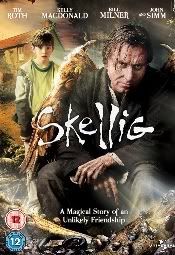
I saw this programme being advertised prior to the Easter break, but, as it was on Sky and I only have freeview, I was unable to watch it. As luck would have it, I saw it in the supermarket the other night and, as there was nothing on television, I opted to buy it. I am a huge fan of Tim Roth’s and as the story appeared to have a supernatural element, I figured it was a safe bet.
I got home and settled myself down and started to watch the extras; I know I do things a little back to front from time to time. The mention of angels made me balk a little, but I gained an impression of a much darker story, so I started the movie a little perplexed as to its actual content. I was in for a welcome surprise.
Skellig is about life, death and rebirth, and the way in which a young boy, Michael, deals with the upheavals these events in his young life. First, he and his family move to a run-down house in a new area of town; second, his baby sister arrives unexpectedly and with complications; next he meets Grace, an elderly patient in the hospital; he meets a free-spirited, local girl, Mina; and, lastly, he finds Skellig in his garden shed. Michael’s life becomes chaotic and confusing as he finds himself out of place, and with little support.
Skellig is an enigmatic character, whose presence in Michael’s life adds a supernatural element to the tale. At first, only glimpses Skellig’s face and hands are seen but, as more of him in revealed, more questions are raised as to who, or what he is. Even with these doubts, Michael continues to build a relationship with his strange new friend.
I can’t say this movie has an unexpected end, but it certainly leaves the viewer with questions about the characters. The story moves along at an adequate pace, the storyline is a little different from the norm, the visuals are wonderful, somewhat seamlessly blending the everyday with the extraordinary, and the performances of the actors, particular young Bill Milner as Michael, are understated, making the world they inhabit seem more real in the face of the supernatural elements of the story.
Although aimed at children, I can see where this production would also appeal to adults. Certainly, its transported me back back to the confusion I felt as a pre-teen as to my place in the world and what was expected of me from friends, family and, well, people in general.
Well worth watching, even if I have more questions than answers.
Rating: 4/5.
30 April 2009


23 April 2009
Unsung
Fortitude in greyness comes.
Not with pithy sayings:
Chin Up;
Keep a Stiff Upper Lip;
Pull Your Finger Out;
Pull Your Socks Up;
Get a grip;
It is always darkest just before dawn;
Things can only get better;
Count your blessings;
God helps those who help themselves;
Pick yourself up;
Dust yourself off;
Start all over again,
... so often said though rarely stirring.
Fortitude in greyness comes.
Not in cheery countenance;
A well-placed arm of sympathy;
Nor coaxing voice of reason;
Or rousing motivational speaker -
All well meant, but inneffective.
Fortitude in greyness comes.
When the sight of those who, in silence,
Tending to their daily obligations,
With ne'er a complaint or confrontataional protest,
Or even a whispered, wistful wish -
just acceptance and contentment.
(Or so it seems to our jaded eyes)
Fortitude in greyness comes.
Not with colour, fireworks, music;
No pomp and ceremony;
No light from above nor inner voice;
No applause nor cheering crowds;
No medals, honours or badges.
No future Bards will recall the moment,
Of some glorious, valorous turn.
No.
No, Fortitude in greyness comes,
When remembering the unsung,
The forgotten everyman, and everywoman
Whose drab, maybe even dreary lives[?],
Continue unabated, uncontested and unrelieved.
Doing what needs to be done;
Day in; day out - with unrelenting persistence.
Those who consistently endure;
With fortitude.
Fortitude in greyness comes.
Plain, simple and unassuming.
© 2009 Ancestral Celt
Not with pithy sayings:
Chin Up;
Keep a Stiff Upper Lip;
Pull Your Finger Out;
Pull Your Socks Up;
Get a grip;
It is always darkest just before dawn;
Things can only get better;
Count your blessings;
God helps those who help themselves;
Pick yourself up;
Dust yourself off;
Start all over again,
... so often said though rarely stirring.
Fortitude in greyness comes.
Not in cheery countenance;
A well-placed arm of sympathy;
Nor coaxing voice of reason;
Or rousing motivational speaker -
All well meant, but inneffective.
Fortitude in greyness comes.
When the sight of those who, in silence,
Tending to their daily obligations,
With ne'er a complaint or confrontataional protest,
Or even a whispered, wistful wish -
just acceptance and contentment.
(Or so it seems to our jaded eyes)
Fortitude in greyness comes.
Not with colour, fireworks, music;
No pomp and ceremony;
No light from above nor inner voice;
No applause nor cheering crowds;
No medals, honours or badges.
No future Bards will recall the moment,
Of some glorious, valorous turn.
No.
No, Fortitude in greyness comes,
When remembering the unsung,
The forgotten everyman, and everywoman
Whose drab, maybe even dreary lives[?],
Continue unabated, uncontested and unrelieved.
Doing what needs to be done;
Day in; day out - with unrelenting persistence.
Those who consistently endure;
With fortitude.
Fortitude in greyness comes.
Plain, simple and unassuming.
© 2009 Ancestral Celt
17 April 2009
Pre-Order "Pagan Paeans"

Yes! You can order directly from Cafe Press and be the proud owner of a copy of the "Pagan Paeans" anthology in a matter of days!
Beautifully printed with high quality covers and binding - the "Pagan Paeans" anthology is going to grace any bookshelf, and help wile away many a happy hour. Be transported to the wilds of nature, or provoked by our satirists; dream of gods and heros or indulge in nostalgia. There is something for every mood, for every reader.
Order now! Be the first to own a first edition of "Pagan Paeans".
Pagan Paeans has an IBSN 978-0-9562403-0-9 and can be wholesaled or bought directly. From May 1st, it will be available through Cafe Press (USA, UK and Ireland, Europe, Rest of World), ppp@anfianna.com (paypal, postal order, individual sales or wholesale UK and Ireland only), and/or Nielsen Book Net teleordering (wholesale only).
Hate Poetry?
Fake it. I don't care :) This is a note of Shameless Celtic Boasting in the grand tradition of our forebears to raise awareness that: (a) we have an anthology; and(b) it's damn fine. PPP Publications are terribly proud of themselves. And if you're thinking why the giddy hell is she annoying ME with this - it's so you know we have an anthology!
Beautifully printed with high quality covers and binding - the "Pagan Paeans" anthology is going to grace any bookshelf, and help wile away many a happy hour. Be transported to the wilds of nature, or provoked by our satirists; dream of gods and heros or indulge in nostalgia. There is something for every mood, for every reader.
Order now! Be the first to own a first edition of "Pagan Paeans".
Pagan Paeans has an IBSN 978-0-9562403-0-9 and can be wholesaled or bought directly. From May 1st, it will be available through Cafe Press (USA, UK and Ireland, Europe, Rest of World), ppp@anfianna.com (paypal, postal order, individual sales or wholesale UK and Ireland only), and/or Nielsen Book Net teleordering (wholesale only).
Hate Poetry?
Fake it. I don't care :) This is a note of Shameless Celtic Boasting in the grand tradition of our forebears to raise awareness that: (a) we have an anthology; and(b) it's damn fine. PPP Publications are terribly proud of themselves. And if you're thinking why the giddy hell is she annoying ME with this - it's so you know we have an anthology!
16 April 2009
Look What I've Got

I am at a loss as to know why, but a talented poet sent me this gorgeous, hand made calendar. I am so chuffed. I knew that this particular poet had sent similar (though each one is individual) items to others, I was unaware of just how beautiful they truly are until I had mine delivered to me today. It will be a family heirloom and I shall always treasure it, even if I have no idea what I did to deserve such an honour.
26 March 2009
Pagan Poetry Competition
"Inspirations"
The Pagan Poetry Pages are proud to announce the latest poetry competition. Take either of the images provided at the website - and write a poem. The best, most original take on it wins!
The winner will recieve a great prize: a £20 gift voucher for either Amazon UK or Amazon US AND a free copy of "Pagan Paeans", the first Pagan Poetry Pages anthology, which is to be released on May 1st, 2009! Post your entries at the Pagan Poetry Pages website, in the section entitled "PPP competitions". Just follow the instructions posted there.
If you are not already a member, register, it's free and very easy to do! If you have any queries please email ppp at anfianna.com.

Subscribe to:
Posts (Atom)