I have decided to remove the Goodreads
widget from the right hand column of this blog, because I am going to delete my
Goodreads account, and move all my
books, reviews, and data to BookLikes,
a rival book/networking site.
The move will mean a lot of extra work, adding covers, adding data on
self-published books and books not found on conventional book seller sites,
etc., but it will be worth it to be able to freely express my opinions of books
to friends, and shelve/tag my books as I see fit without interference (read:
censorship) from the website owners. I have been a member of Goodreads for many years, with
over 900 books listed, (virtually) met lots of fellow pagan readers, and was a
librarian: editing covers; inserting book summaries; inviting fellow authors I
admired to join groups and enter into discussions about their work; and adding
books from obscure publishers, many of which were pagan and/or occult related,
to the ever-expanding database. I am not the only librarian to leave
under protest and, this appears to have resulted in a slower response time to
requests from members of Goodreads
to make amendments to books, as many super-librarians - those who have
made thousands of edits or more to the Goodreads database -
depart.
Normally, I detach myself from spats between authors, readers, fans, and
member but when Goodreads decided
to edit its policy on reviews and how their membership named bookshelves
without informing their membership of the same, and then began deleting
personalised shelves without rhyme, reason or informing infringing members
first (to provide them with time to amend or save the content), I felt it was
time I moved on – being a believer in self-censorship, but little beyond that.
I was taken aback when I learned one member’s shelf, innocuously titled
"Tain", relating to Táin Bó Cúailnge was deleted
without warning. Perhaps Goodreads staff felt they
were able to read the mind of the member, and came to the conclusion that the
name "Tain" was a comment on the behaviour of the authors – as
this is the only reason for deleting shelves according to the scant comments from Goodreads staff on the unannounced policy change?[1] Where is the logic in deleting a shelf
entitled “bad authors” but leaving
another shelf, belonging to the very same member account, called “cool authors”?
It all seems hypocritical: instigating a policy supposedly to end the
targeting of authors, only to bully their own members by saying that staff know
what a member is really thinking when naming a shelf “authors I want to avoid”, i.e. it’s a comment on the author’s
behaviour.[2]
Oddly, the policy change, censoring of book shelf titles, ensuing furore,
and mass exodus of members occurred during Banned Book Week.
For now, it seems BookLikes
are keen to hear the suggestions of their new members, and have promised to
provide lots of new goodies including a private messaging system, and groups
function for socialising, and will be developing apps for those of us who read
on the go, but like to update our progress.
I’m pretty hopeful my celtic myth shelves will be at BookLikes for a long time to come.
27 September 2013

15 August 2013
A Repost
I kind of felt the need to reblog one of my own posts from 2011: "9th Century Irish Myth and the Internet". It came to mind after witness several (non-)discussions on internet groups.
I read this and thought it needed reblogging, because it is an inspired connection between the Irish myth and the internet of today.
From Mo Thearmann:
~¦~
I read this and thought it needed reblogging, because it is an inspired connection between the Irish myth and the internet of today.
From Mo Thearmann:
This always comes to mind when I see people acting like idiots online. It's from Tecosca Cormaic (The Instructions of King Cormac).
"O Cormac, grandson of Conn", said Carbery, "What is the worst pleading and arguing?"
"Not hard to tell", said Cormac.
"Contending against knowledge,
contending without proofs
taking refuge in bad language
a stiff delivery,
a muttering speech
hair-splitting
uncertain proofs,
despising books
turning against custom
shifting one's pleading
inciting the mob
blowing one's own trumpet
shouting at the top of one's voice."
12 August 2013
Kilmartin Captured
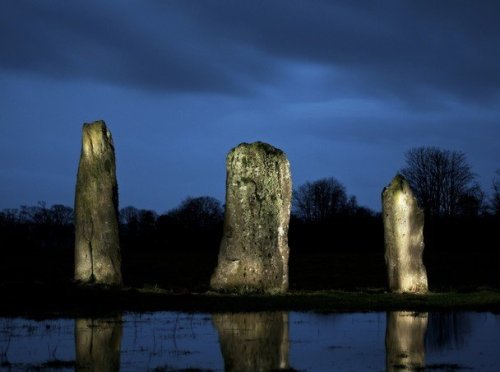
discoverthetrip:
Kilmartin Glen is an area situated at about 25 miles south of Oban in Argyll, surrounding the village of Kilmartin and contains one of Scotland’s most significant concentrations of Neolithic and Bronze remains.
10 August 2013
Corp Criadhach
Unfettered Wood has done a blog post on the Corp Criadhach, the doll, or poppet in Scottish witchcraft.
06 May 2013
People who had the evil eye were regarded as witches | Tobar an Dualchais
You can listen to an excerpt of a recording of Anne Ross speaking to a gentleman about the "Evil Eye" in Scotland here.
05 May 2013
04 May 2013
30 April 2013
Another Defensive Wall Found in Scotland; Thought to be Larger than Hadrian's Wall
The Daily Mail's headline reads "Hadrian's Wall had a bigger and older Scottish brother: Archaeologists's 10 year study uncovers 120 mile defence system built in AD 70s to keep out northern tribes".
Archaeologists have been carrying out research into a huge late fist century AD defence system, which stretches 120 miles across Scotland.
A total of 14 forts and several fortlets, which formed part of a defensive network built in the AD 70s, have so far been investigated over the past decade by the team, led by Dr Birgitta Hoffmann and Dr David Wolliscroft, both of the University of Liverpool.
Click here to read the rest of the article.
- Archaeologists reveal Roman defence system in Scotland
- Structure is believed to be made up of forts, fortlets and watchtowers
- Thought to have been built in AD 70s after Romans invaded Scotland
- Deterred hostile northern Caledonian tribes from invading land
Archaeologists have been carrying out research into a huge late fist century AD defence system, which stretches 120 miles across Scotland.
A total of 14 forts and several fortlets, which formed part of a defensive network built in the AD 70s, have so far been investigated over the past decade by the team, led by Dr Birgitta Hoffmann and Dr David Wolliscroft, both of the University of Liverpool.
Click here to read the rest of the article.
Subscribe to:
Posts (Atom)