19 November 2010

Land of the Seal People

 
Author: Duncan Williamson
ISBN: 1841588806/9781841588803

I read "The Land of the Seal People" having just finished David Thomson's excellent "The People Of The Sea: Celtic Legends And Myths: Celtic Tales of the Seal-folk". I was hoping it would match it for warmth and wonder, but I was to be slightly disappointed. Although each tale comes with a paragraph explaining where it was heard and a description of the teller is included, names not always included for obvious reasons, the atmosphere in which the tales were told is missing and the attachment gained from learning more about the teller is lost. To that end, I could not warm to these tales as much as I could to those told by Thomson.

"The Land of the Seal People" doesn't just focus on the selkie, but includes encounters with others of the supernatural kind and, as much as I enjoy these, I was a little disappointed as I was hoping to learn more about the seal people and/or selkies. I was also put off by the overuse of the character name Jack, which featured heavily about 3/4 of the way through the book. It seemed to me that in every tale, Jack has lost his father young and was left an only child supporting his mother. True, each of Jack's adventures was different, but I started to become disinterested the moment I saw the name Jack.

Because I did not get the same feeling reading "The Land of the Seal People" as I did "The People Of The Sea: Celtic Legends And Myths: Celtic Tales of the Seal-folk", I doubt I will be re-reading it and I am unsure as to whether I should read Duncan Williamson's other books on a similar topic. I did enjoy reading both books and seeing the connection to the film "The Secret Of Roan Inish" though I did learn that the book on which the movie is based was originally set in Scotland. Overall, I enjoyed the book but I think it might have endeared itself to me more had I read it first, and then Thomson's book.  

Rating: 3½/5.

15 November 2010

The People of the Sea

The People of the Sea: Celtic Legends And Myths (Canongate Classics)


Author:  David Thomson
ISBN:  1841951072

I bought this book some time ago, but it seemed destined to remain on my "to be read" shelf.  Earlier this year, while on holiday in Scotland with a small tour group, I noticed one of my fellow passengers was reading this book and when I enquired about it, she was unable to tell me much, which of course peaked my interest.  This was just one of a series of co-incidences in which the legend of the selkie were brought to my attention: just before, during and after the tour of Scotland.

As well as watching a few selkie-related movies when I returned from my trip, I resolved to read the book; however, being a member of a book club, I found myself reading other books, all the while "The People of the Sea: Celtic Legends And Myths", though taken down from the shelf, remained in my satchel (unread) just waiting to be started.  So last Friday I picked up this book and I only put it down three times: once to drive home, the next because I wanted to savour the last tale and then, finally, when I finished it on Saturday night.  The book was so enchanting I didn't want it to end. 

I knew "The People of the Sea: Celtic Legends And Myths" would be different when I read Seamus Heaney's introduction and I was not to be disappointed.

"The People of the Sea: Celtic Legends And Myths" is somewhat of a memoir as the author, David Thomson, travels the western islands and coasts of Scotland and Ireland, in search of those who can tell the tales of the selchie (selkie) or sea-folk.  First, Mr Thomson introduces the storyteller, he then sets the scene and atmosphere in which the story is being told and, finally, he recalls the conversation that illustrates the tale, bringing it fully to the light.  There is not always a straight line from beginning to end with these stories, as someone will interject with their own version of events, and then another, but the main speaker provides a continuous thread weaving all the information together.   I must admit that I felt myself sitting there in the closeness of that store/pub in County Mayo along with Michael the Ferry and his passengers as they gave up their hidden stories; just as I felt right there, with the author, as he (we) paid keen attention to every storyteller in the book.

As Mr Thomson travels through the lands from which these stories emanate, he clearly illustrates the loss of the (Seanchaí) storytellers along with their myths, tales, lore and legends as modernisation takes hold*, so that I was made to keenly feel the loss of the culture where once people lived between reality and the otherworld.  Like all things celtic (what a loaded term), the tone is slightly melancholic, but the stories are so full of wonder I was loathe to read the last tale, for I knew I would be sad indeed to reach the end with no more tales to be told and my journey of wonder into the past over.

I must admit that despite the way some of the stories are delivered, oft times in conversational form, they do lend themselves to be performed at storytelling nights, where both adults and children can appreciate and enjoy them.

I cannot recommend this book enough: it is simply warming even if some of the stories are meant as warnings.   I think I shall always treasure "The People of the Sea: Celtic Legends And Myths" and re-read regularly, more particularly when it's cold, wet and the wind is lashing at the windows.  If you have any interest in folk tales, fairy tales, the legend of the selkie, or the transformative powers of magic, you will probably enjoy this book.

Read it!

Rating: 5/5.


* In the time the author is writing and recording, radio as much as television is taking hold of the minds of the young, causing the decline.

09 November 2010

The Fox

The Fox

AuthorArlene Radasky
ASIN: B003XVIXR0

This was my second experience of listening to an audio book downloaded in podcast format. My first experience had been wonderful and I had high hopes for The Fox.  It started well: the story alternating between modern day Scotland and the people of Scotland at the time the Romans occupied Britain, i.e. my present and an area in which I have a lot of interest.

Although I had issues with the way The Fox was transcribed to audio by the author, the storyline created enough curiosity for me to continue listening on my commute to and from work. By about episode 9 of The Fox, however, I had found it too slow; seemingly dragging on for ages. Unlike my previous experience of a book in podcast format, I had to force myself to listen to the remainder of this podcast book - even though I barely managed to remain tuned in - just in case the story and/or the reading of it picked up. I am not sure there was a climax, or which part was intended to be the climax: the event in the past; or the connection in the future. The story seemingly just drifted off and faded.

The Fox centres around two characters, really: the modern day archaeologist, Aine, and a Pictish[?] woman Jahna, both living around Fort William. Jahna starts as a young girl, living with her clan, when a stranger arrives to join their community, Lovern, who it seems has the skills of healing. Jahna sometimes has visions, which link Aine to her along with a group of foxes. Aine is working in the area where Jahna's clan once lived, trying to get funding and help for a dig that seems doomed, as the owner tries to sell the land from under her ... and so the story goes.

The audio broadcast of The Fox was peppered with pauses in strange places causing a stilted flow - having not read the book (only have a .pdf) I cannot comment on written punctuation, but the spoken punctuation was awkward, jarring at times. The author continued to pronounce one of the main character's name, Aine, incorrectly: rhyming it with "aim", rather between "AHN-yuh" and "AWN-yuh" and I wish Ms Radasky had refrained from using accents for certain characters, in particular the one used for Mr Treadwell which was very muddled indeed. This is just a sample what irked me about the storyline, historical details and the audio translation, I am loathe to provide more as it's probably a personal thing; others may not have the same quibbles.

I am sorry to say that as the episodes came to a close, I was utterly disinterested in the characters, any resolution to their problems, and indeed hearing the author's rendition of the same. I'm afraid I won't be recommending this book in future.

Rating: 2/5.

31 October 2010

Not My New Year

"Autumn, The Hermitage, Scotland"  by Picture Girl
As usual, I have read various articles and blogs relating to paganism and witchcraft as Samhain approaches. Having read the same statement several times over, I feel the need to use this blog to make a statement of my own: I do not consider Samhain the pagan new year. As it happens, not all pagans follow the same path and/or festivals and many do not believe Samhain to be the Celtic new year, myself included.

For me it is the final mark of the end of Summer, the beginning of winter as part of a never-ending cycle; a time to remember those of my family/clan who have passed; and a time for divination, as the veil becomes thinner.

24 October 2010

Mock the Week

"Mock the Week" did a piece on the recent acceptance of the TDN by the Charities Commission. It's a good laugh.

05 October 2010

Autumn

From "The Guesting of Aithirne"


A good tranquil season is autumn,
there is occupation then for everyone
throughout the very short days.

Dappled fawns from the sides of the hinds,
the red stalks of the bracken shelter them;
stags run from the mounds
at the belling of the deer herd.

Sweet acorns in the high woods,
corn-stalks about cornfields
over the expanse of the brown earth.

Prickly thorn bushes of the bramble
by the midst of the ruined court;
the hard ground is covered with heavy fruit.
Hazelnuts of good crop fall
from the huge old trees of mounds.


~ translation by Kenneth Jackson

08 September 2010

Review: The Secret of Roan Inish

Just before, during and since my trip to Scotland the Selkie myth has been brought to my attention on several occasions. There was a book, mention of them by various people and while searching for a film to watch, having viewed "Ondine", I stumbled across "The Secret of Roan Inish" on Amazon.

I perused the description of the movie at Amazon, a single line that offered little in the way of what to expect. One Australian reviewer, Brian Barratt, revealed the whole movie without offering a spoiler alert, though he did proffer further information on the myths and legends associated with selkies and seals. Despite knowing the complete storyline, I ordered the DVD; it was going cheap.

Arriving home from work in the early hours of the morning, with nothing on the box, I began to watch the movie. I must say the beginning was a little confusing, but I soon caught on. The movie isn't fast paced and is probably aimed at children, nonetheless I enjoyed it. Even though I knew "the secret", I was still entranced by the tale and found myself becoming anxious as to how the story would resolve; I was glued to the screen.

The story centres on a girl called Fiona, who is sent to her grandparents' house in Donnegal to escape the city in which her father now lives. The proximity of her grandparents' house to the island of her family's origin, Roan Inish, causes the girl to ponder the fate of her infant brother, Jimmy, now mourned by his family. With the help of her sympathetic cousin, Eamon and some more distant, dark relatives, Fiona uncovers the truth about her island origins; and the truth is stranger than myth.

A fantastical, magical tale which slowly unwinds.

I recommend this DVD/film to anyone interested in selkies and celtic tales of wonder.

Rating: 4/5.

07 September 2010

Incense Holders

I have never really liked the dark wood appearance of most incense holders, as I prefer lighter colours and, to be honest, the designs didn't appeal either.  I prefer the idea of keeping anything lit under protection, but given most incense boxes caused my incense sticks to burn out forcing me to relight them every so often, I tended not to use boxes at all.   I did buy one tower, but it was of dark wood and I just couldn't find a place to put it where it wouldn't stand out.

In Wicca Moon on Saturday, I stumbled across this tower incense burner.  Given I have a fascination with the heart shape and it was washed in a light green, I had to have it.   The bonus was when I got it home and started to use it: because the holes in the cut-out heart shapes are so large air easily circulates, so the sticks never burn out and the smoke escapes in lovely plumes filling the room with the aromas of the incense in no time at all.  It can burn four sticks at once and/or a single cone which allows for a greater intensity.

I am so happy with the stylish little purchase.  I realise it will not be to everyone's taste, but it suits me and my accommdations.  If green doesn't appeal, it also comes in white and blue.  I think I may purchase another one and have my own version of The Two Towers.

06 September 2010

Thank You

Would just like to thank Edain for The Sunshine Award left for me at her blog and her kind comments on one of my previous posts.  I'm glad that my blog helps you, even in some small way.

29 August 2010

Megalithic Tour 2010

This is a photograph, the first of hundreds, which I took on my tour of the north-west of Scotland with Megalithic Tours. I hope to process all my photographs soon and publish an account of my experiences at the various sites here on these pages.

I truly enjoyed my time with the group and in Scotland and I hope to return many times to Scotland, and, gods willing, move there permanently. I feel so much more connected in Scotland, without even trying, and the pull is strong.

I made a few offerings as discreetly as I could, and I believe they were well received. Certainly, the tour went without a hitch, despite weather forecasts threatening the crossing to Lewis. I would have been disappointed indeed had I not seen Calanais again.

So, back in the south-east of England again, but aready thinking of next year's journey north.

26 August 2010

A Wishlist


I have a wishlist of things I know I will never own, but still desire and I have to add this the list.  It's currently listed on ebay, but it is beyond my means.   It still doesn't stop me from wanting it though.

Description:


Culture:
Romano European
Date:Late 1st Century BC
Size:Diam @ 17mm
Description:A rare ring which has survived in excellent condition with a small elegant band with oval bezel which describes a single sheath of wheat. For the assigned date for the ring it may have had associations with the Roman God of Crop Protection "Robigus". The patina is of blackened silver and has a gloss finish. Calcite deposits are seen within the inner band and behind the bezel which attest to the great age of the ring. In very Fine Condition - Ex French Private Collection.

11 August 2010

White Dragon Magazine

Once upon a time, I used to read a magazine called White Dragon.  In fact, I was a subscriber, so I always received the magazine through the post at least one or two days days before it would arrive in the local shop.  Since Samhain 2009, however, I have not received the magazine and my emails have not been responded to.  I see that the forum is down, not that they were ever that active but, even so, it's another sign that the magazine is no more.

I have searched on the internet, in vain, trying to ascertain what happened, but, alas, all is silent.  If anyone does have any news about White Dragon, please let me know.  I especially want to here that it is to return.  I certainly hope that the website is not lost, as there are some interesting articles and reviews to be found there which indicate the kind of quality that will be lost if the magazine has indeed folded.

09 August 2010

Consumerism

I gave into the consumer in me on Saturday and purchased a clay cup with a stag's head on it.  It's not perfect, as can be seen from the picture, but it's cute. 

I have no good reason for the purchase, as I am not going to use this item in rituals or any celebrations.  I intend to use it as a daily item,
and drink my cordials from it.  I like it; it's quirky. 

I just wish I could justify spending money on a want, rather than a need.

08 August 2010

More Pagan Dating Sites for Singles

It seems the Ning network has two places for pagan singles to meet others. The first is the Wiccan/Pagan Singles Club, and the second is Pagan Singles.

So, for those who are looking for free sites, these might be worth a look.

07 August 2010

Pagan Dating Chat

Finally, a pagan dating site has enabled chat, allowing members to communicate in real time, rather than resorting to conversing purely through the dating site. Most sites don't allow you to insert your mail address or telephone number even in private messaging and then, there are limits to the number or private messages allowed to individual members, making it difficult to make real life connections.

So, well done, Olde Souls, for installing a live messenger/chat section for us single pagans. I think I may be visting more often now.

05 August 2010

The Hermit

A friend of mine has decided to create her own tarot deck and has made a request of me: to model for The Hermit card. I have agreed as I think it will be an interesting project. An artist has been hired to create the cards from the ideas of my friend, and these will all be modelled on things personal to her, including her friends, family and pagan folk of her acquaintence.

At this stage, the deck is to be majors only, but some of the ideas I've heard sound wonderful.

I am sure it will be a few years before the deck is finished but, when it is finished, I will be sure to post a picture (friend's permission permitting) here at my blog.

All rather exciting I think.

22 July 2010

Britain BC

Britain BC: Life in Britain and Ireland before the Romans

Author: Francis Pryor
ISBN: 9780007126934

It has actually taken me two years to read this book. I started it in July 2008, and I remember finding it hard to comprehend. It seemed all over the place and I had difficulties with the way Pryor went into long, confusing descriptions of various archaeological dig sites. I felt extremely stupid as I just could not visualise that which he attempted to illustrate with words in detail. I became frustrated and, instead, found other books to distract.

This year I have made a concerted effort to finish those books I struggled with in the past. I picked up Britain BC again, but instead of returning to the beginning, I continued from where I had left off in order to distance myself from the earlier frustrations. It worked! I was able to read this book somewhat more comfortably and actually absorb most of the information.

The detailed and wordy descriptions of various artefacts and archaeological digs sites still left me reeling, but pictures and illustrations are provided (more frequently in the second half of the book) which help to clearly demonstrate what Pryor is tries to describe in words. In some cases, I still skipped the details in favour of understanding how the site/artefact furthered the understanding of a particular time, people, community or way of working.

Britain BC did provide me with insight in the world of archaeology; its progress over the years; and an idea of how archaeologists work today both in terms of learning about our past and in preserving it for the future. I marvelled at the amount of speculation involved in seeking to put finds into context, giving the impression that the purpose of a site or artefact can never be certain where archaeologists are involved. This was quite a lesson for me. I found it disconcerting that as Pryor dismantled the ideas of others, he sought to replace them with his own imaginings, a few of which I thought less credible than those he had just rejected. Still, what do I know?

I was taken by the idea that, immediately prior to the arrival of the Romans, British society was not necessarily a cohesive whole but rather made up of small community groups, some of which had banded together to form larger societies. Pryor also speculates that some of these communities did not have a formal structure, but were loosely banded together, and there may not have been an elite class as previously thought or imagined by rich burial sites.

Prior to reading Britain BC, I was unaware the Iron Age extended into the early part of first millennia CE with crannogs and brochs being in use in 600 CE, but only in those areas where the Romans had not tread. Although I have gained some insight into what is known about the various “ages” of prehistory, I might have assimilated more if the author had refrained from flitting between archaeological dig sites, with a quick tangent into the future of one or another site "... but we will explore that further later in another chapter" (to paraphrase) and back again. As a reader, I felt disconnected from the finds or how they corroborated what was known about the people and/or communities of the age and how they lived in the landscape. I was lost quite a bit of the time; I needed lots of breaks from reading this book in order to take my bearings. I know the author is enthusiastic - I can read it in his text - but I think more careful editing might have made the evidential information more accessible.

Overall, the book did provide me with a basic knowledge of prehistory in Britain and it's all in one place instead of the myriad of bits and bobs floating around in my head from reading news updates from various archaeological websites. I have definitely learned more than I ever did at school about the subject. It's just Britain BC is not a book I would, or even could, use as a reference to with which to check my understanding.

I am not sure what is says about the book when the first thing I can say about it is: "I now know the difference between pre-history, proto-history and history".

Rating: 4/5.

24 May 2010

Defences Against the Witches' Craft

Defences Against the Witches' Craft
Title: Defences Against the Witches' Craft: Anti-cursing Charms from English Folk Magick, Traditional Witchcraft and the Grimoire Traditions
Author: John Canard
ISBN: 9781905297184

No preaching, just practical ways of preventing and combatting curses and hexes. I only had one small quibble on a historical matter, but other than that a superb book that every witch should own.

Defences Against the Witches' Craft is a slim book packed full of useful information on charms, amulets and other ways of dealing with malefic magical forces; taken from history, but still used in modern times.  The author, John Canard, provides methods of preventing and combatting curses and hexes using a wide variety of English practices including herbs, poppets, special stones and other traditional tools.  The source of information is provided in all cases, most of which is very much rooted in England, but is supplemented by similar practices from other cultures, and a small bibliography is provided for the reader who wishes to explore further the historical uses of the various items mentioned in the book.  For the most part, it is assumed the reader has a working knowledge of magic, with step-by-step instructions provided only for a few methods.

The book is well written, in a friendly manner, and refrains from preaching on ethical matters.  I recommend this book and I am considering it as a birthday present for more than just one of my witchy friends.

Rating: 4½/5.

21 May 2010

The Mark of a Druid


Rhonda R. Carpenter has managed to pack a lot into "The Mark of a Druid".  It features England, Ireland, the United States, the past, the present, druids, christians, sovereignty, shapeshifting, prophecy, reincarnation, past life regression, hypnosis, murder and drama.

I listened to the book in audio format via the free subscription at iTunes.  The story seems slow to start and jumped quite a bit, from past to present, and between characters but, eventually, I was hooked.  Towards the end, as all the elements started to come together, the pace quickened, but the author was careful to keep you waiting for the ending you knew just had to be.

One quibble I had with the podcast format was the Rhonda R. Carpenter's reading style.  Strange punctuational pauses were distracting as was the apparently inappropriate changes in pitch giving emphasis were it was not warranted.  After a while, I noticed it less and less, with only the occasional inner query arising.   Still, it was worthwhile listening to the audio version on my commute to and from work.

I will purchase a hard copy of "The Mark of a Druid", eventually, to re-read at my leisure. I would imagine it would be a great book to take on holiday as the story is broken down into small segments, as it alternates between the past and present, thus allowing the reader to pick it up and put it down at will.

Rating:  4/5.

18 May 2010

Valhalla Rising

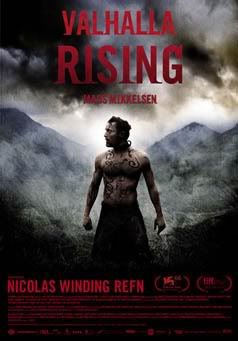
Watched "Valhalla Rising" last night. The director refers to his movie as Viking Sci-Fi in the "Making of ..." extra. The characters don't go into outer space, so much as inner space and it's a numinous but brutal film. I found it hard to comprehend at first and I had no idea where I was being led but the journey is intense.

Mads Mikkelsen, the Danish actor (King Arthur, Clash of the Titans), plays the central character, who is mute, referred to as "One Eye", but is listed as Harald in the credits.  Scottish actors fulfill the roles of the Vikings.

The one-eyed slave is kept by a pagan clan because he is a champion in fighting tournaments. After a vision[?], the enslaved warrior finds a way to escape his captors.  After an encounter with Christians seeking Jerusalem and its riches, the journey to the promised land/Valhalla/Hel begins.

The cinematography is darkly atmospheric and the director allows the uncompromising weather of the Highlands of Scotland to add to the intensity of the characters and storyline.  The beauty of the landscape however does little to counter the violence encountered in various scenes.

Valhalla Rising is definitely a film that requires more thought than it might at first appear.  I shall definitely be viewing it again.

12 May 2010

Submissions Sought: Pagan Poetry Pages Summer 2010 Edition


The Pagan Poetry Pages are now accepting submissions for their Summer Edition. All writers of poetry and prose are invited to submit their work, either by posting on the fora at the Pagan Poetry Pages website, or by emailing the editor at editors(at)paganpoetrypages(dot)com.

Writers do not have to be pagan, but if the piece is pagan themed, or related to paganism in some way, please consider submitting your work for publication to the Summer edition of the Pagan Poetry Pages.

24 April 2010

Old v. New

Has anyone else noticed that older books on witchcraft focussed on hexing and cursing, but for the modern witch looking at books, these are rarely discussed and certainly instruction is absent?

Yet, the ability to curse, hex or work magic to the detriment of others (steal their milk, crops, lover) using foul ingredients seems to have been mainstay of the historical witch. Even love spells of old involved the use of semen, blood and urine and not always with the consent of the intended paramour. When I hear of a modern witch collecting afterbirth, hen's feet, graveyard dirt, snake skin and poisonous substances, I doubt the knowledge to know how to work with these items comes from modern books.

Nowadays, the focus of today's witchy authors seems to be on healing the self, raising protection or attracting good fortune and love, but the ingredients are now more likely to be a pretty crystal, nice incense, or an unbroken mirror (no blood, sweat, tears or toenails for the modern witch). Historically, finding lost items, reversing bad luck, providing protection were once the preserve of the cunning folk, who worked against witches, but no-one ever seems to take up that title anymore and certainly no books on becoming one (or is there?).

So what's changed? Why do modern authors stay away from the older forms of witchcraft and its ingredients, with apparently years of proven results? Why, too, are there so few books on hexes, curses and other baleful magic? Where do these modern witches working the old fashioned way get their knowledge? Why aren't these witches publishing their work for consumption by the modern witch?

31 March 2010

Call for Writers: Minority Voices in Paganism

Feel Free to Post This Elsewhere


Megalithica Books, an imprint of Immanion Press (Stafford, U.K./Portland, OR, U.S.A) is seeking submissions for an anthology on people of color working in magical communities. This anthology will be an opportunity to get the voices and experiences of minorities within the Pagan community out to the world and address some of the challenges, stereotyping, frustrations and the beauty of being different within the racial construct of typical Pagan or Wiccan groups. These communities include (but are not limited to) groups and individuals working in Wicca, Voodoo, Umbanda, Shaman, and other Pagan paths.

Many of the roots of Paganism have come from the lands of people of color yet the mainstreaming of Wicca has elevated images of worship and deity that connect with Celtic, Greek or Roman cultures. This can have an exclusive effect on those who’s culture or ancestry fall outside of those categories. Interestingly enough people of color within Paganism are often walking between the worlds of their birth ancestry and culture and that of their spiritual culture. This anthology is an opportunity to share your stories and experiences with others around being a minority in our spiritual community.

Here are some suggested topics to give you an idea of the focus of this anthology.
  • Your experience of integration into the Pagan community
  • Magical work
  • Ancestor work
  • Integrating your birth culture with your spiritual workings
  • Personal experiences and thoughts around how being of color within the Pagan community was significant.
  • What magical work are you doing now? How do you describe it? Do you work alone, in a group, or in several settings?
  • Your birth culture and spiritual workings
  • Stereotypes and prejudice
  • Being the only person of color in a coven, group or community
  • Sharing your culture and history with other Pagans
  • Cultural history
  • Sub-culture of African Americans, Hispanics or other minority groups within Wicca or Paganism.
  • Is there a sense of acceptance within the magical community you work in? Do you encounter resistance in your magical community or acceptance?
  • What do you feel is needed to be more inclusive of racial diversity in Pagan communities
Rough drafts are due July 15, 2010. These drafts will be edited in a back-and-forth process with the editor. Essays should be 1500-4000 words, although if your work falls outside those limits, do submit it – we can discuss this during the editing process. Drop us an email if you are unsure whether your idea fits into the content. The sooner you start the communication process the better, as after the deadline we won’t be considering additional ideas.

Essay requirements:
  • Citations for all quoted, paraphrased, or otherwise unoriginal material
  • Bibliography of works cited
  • Prefer APA format
Do write in your voice! If you’re academically inclined or trained, feel free to be as intelligent and technical as you like. If your work entirely talks in the first person about your own experience, please include this also. There is a wide range of voices, and we are interested in being as inclusive of style as possible.

Accepted contributors will receive a free copy of the anthology when it is published and additional copies sold at 40% off the cover price to contributors. All contributors will be provided with a contract upon final acceptance of their essays, not when they are accepted for editing. If your essay is not accepted for the anthology, we will tell you after the first round of edits.

The anthology will be edited by Crystal Blanton. She is the author of an upcoming pagan/occult nonfiction book called Bridging the Gap; Working Within the Dynamics of Pagan Groups and Society. She may be found online at http://www.crystalblanton.com and her email address for this anthology is crystal@crystalblanton.com.

Immanion Press is a small independent press based in the United Kingdom. Founded by author Storm Constantine, it expanded into occult nonfiction in 2004 with the publication of Taylor Ellwood’s Pop Culture Magick. Today, Immanion’s nonfiction line, under the Megalithica Books imprint, has a growing reputation for edgy, experimental texts on primarily intermediate and advanced pagan and occult topics. Find out more at Immanion Press.

22 March 2010

The Little Book of Ancient Charms

Author: T. F. Thisleton-Dyer
ISBN: 1901163067

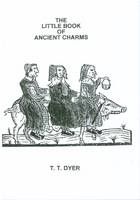
This book is indeed little, being only 36 pages.  It was written in 1878 and is currently published by Oakleaf Books, in a very rough and ready manner.   The typeface is a little small for these tired eyes, but it was still an enjoyable little read.

The book covers charms for various medical conditions, as found across the British Isles.   There is a small selection of remedies given for each malady.  One particular favourite is the use of the actual hair of the dog to counteract intoxication which has been replaced, in modern times, with the imbibing of more of the alcohol that caused the complaint in the first instance.

There are footnotes should the reader wish to investigate further, but these lack detail and there is no bibliography.  

A charming read.

Rating: 3½/5. 

12 March 2010

Ha Ha Lili - Sa Dingding

Here is the latest video offering from Sa Dingding, the Chinese musician and artist whose new album, "Harmony" has just been released on CD this week. I wrote a review of her first album, "Alive" here.

The song is called "Ha Ha Lili"; the full title apparently translating to "The Story of Heaven and Earth".

07 March 2010

How to know?


I recently finished reading a book by Stuart Piggot, "The Druids" and thought the information presented therein was reasonable, discussing what is known about the historical druids, with a little rant at the modern movement beginning with the romantics. The book was written in 1974 and was a slim, paperback volume, and written in an easy to digest style.

During a discussion on some of the historical texts, I struck a problem, this paragraph:


The Druids (Ancient Peoples and Places Series)"There are two pieces of Celtic gnomic or proverbial wisdom recorded by the classical writers, and one attributed specifically to the Druids, that deserve comment here. Diogenes Laertius attributes to 'Gymnosophists and Druids' certain 'riddles and dark sayings', 'teaching that the gods must be worshipped, and no evil done, and manly behaviour maintained'. This is a statement in typically Celtic triadic form, and it is interesting to find what must be another version of it in an Irish tale, The Colloquy of the Elders, which dates from the end of the twelfth century, but may incorporate earlier material. Here St Patrick talks to one of the old pagan Celtic heroes, Caelte, and asks him: 'Who or what was it that maintained you so in your life?'; to which comes the answer, 'Truth that was in our hearts, and strength in our arms, and fulfilment in our tongues' – essentially the same three qualities in slightly different order."


I couldn't figure out how the author thought these two statements were similar in any way. I posed the question on a few forums, hoping for some answers, all the while feeling I was being stupid. So far, the responses I have had tell me I was not being stupid and the author is making a connection where there isn't one. Now, I am questioning if there are other parts of the book I shouldn't trust. But, how am I to judge? I have no background in archaeology, history, linguistics or any other field which might allow me to discern the truth. How do other, non-academic people like me manage this? I read what I can, but obviously if I can't evaluate the information critically, I might be treading down the wrong path.

I want to learn the truth, as far as we can know it today, but I am finding I am getting lost in the mire because I am unfamiliar with the landscape.

What can I do?

All suggestions welcome.

18 February 2010

A movie of "The Way of Wyrd"?

I have been listening to various podcasts on my commute to, and from work to make a long journey more interesting.   One of those to which I subscribe is Damh the Bard's "Druidcast".  

In January 2010, Episode 34 of "Druidcast" featured an interview with the author, Brian Bates,  and he mentioned working with New Line Cinema in an attempt to bring "The Way of Wyrd" to the cinema.   I hope, really hope, it goes ahead and is done well.

It seems there are a few movies, in various stages of production and pre-production, which might be of interest to pagans and heathens.  It's gratifying to see film producers looking to the old tales and reviving and/or retelling them for a younger generation which is more accustomed to MTV than reading books.   Even if these films should get the Hollywood treatment, it's still pleasing to see the resurrection of the old tales (in whatever form).   I can only hope many more myths are converted to film, tempting this former film fanatic back to the cinema.

11 February 2010

Poetry Challenge

A challenge for all poets: Write a love poem or an anti-valentine, whichever you prefer for Valentine's Day.

Post it at the Pagan Poetry Pages, with  either "Valentine" or "Anti-Valentine" in the subject line.

03 February 2010

Jillian LaDage - Music Manifesto

Back, in July 2009, I did a review of Jillian LaDage's album, "The Ancestry" here.  If you listened to it, and enjoyed it, then please read below.


February 2, 2010


To Friends and Fans of Music Everywhere,

Out of the blue I woke up this morning thinking this:-

Can we make a difference? Can we tell the media what it is we want to hear? Can a virtual unknown Celtic singer (me, Jillian LaDage) garner the attention of a music industry, so commercially focused, in one year's time from the fans?

Of course we can! Why not?! I would not be here without you.

Is this insane? Possibly.

Here is my question to you; can you add 10 friends, family members, and acquaintances as Fans on the Jillian LaDage Facebook Fan Page and the free email mailing list via Join the Tarith Cote Community on my Official Website? Can you add 50?  100?  What about the newspaper boy, the mail man, the lady in line at the post office, your neighbor down the street? What if at years’ end this page goes from 38 fans to over 5,000? What could happen? Can you imagine? Would the media and music industry take notice? Would they hear our voice? Will you join me in an experiment that lets your voice be heard and is solely directed by you, the fans?

Tell anyone and everyone from now through December 31, 2010. Let’s show the music industry what we as consumers can do. Add your friends through Facebook with a post on my fan wall saying, "(Insert name of the friend, who referred you, here) and I am in!" Copy and paste this message to your wall, emails, letters, flyers, posters, etc.  Whatever you have your hands on, use it. Got free advertising space?  Use it! Add it to your signature. The ways are endless and let’s create our own phenomenon. One powered by friends and fans of music!

Truly Yours,
Jillian LaDage
Jillian LaDage on Facebook
The Official Website

31 January 2010

"The Big Questions" - Reaction

So, I watched the programme which debated "Is Paganism more relevant today than Christianity?" on Sunday morning.  I watched it again when it appeared, in two parts on Youtube.

And, here is what I thought:  I felt completely unrepresented.

I felt that the pagan speakers were poor.  For example, none of the pagans refuted the statement that past pagans practised human sacrifice, let alone counter with the Christian God requiring Abraham to sacrifice his son, Isaac.   It was stated that paganism had no benefit as pagans were portrayed as nothing more than nature worshippers, and a non-religion, having no moral or ethical guidelines.  Well, I, for one, don't worship nature. I do have moral and ethical guidelines, not borne of a "sustainable relationship with nature", as stated by ERO, but from the society in which I live and the myths of my ancestors; the central tenet of my particular faith being "truth" (roughly translated).  Those that follow the Norse tradition have a set of strict ethical and moral codes to which they adhere, as do several other groups, including Wicca.  So, the statement that paganism is not a religion because it has no moral/ethical guidelines is false, but was weakly rebutted on the programme offering only that morals and ethics were innate.

Paganism is not a religion, it is a "hold-all" term for many different faiths, religions and philosophies, and it is impossible to refer to pagans as a cohesive whole.   Although ERO tried to explain this in relation to the question of afterlife, it was ignored and the debate continued as though all pagans have the same ideas about everything and worship or practice in the same way.   Even the opening statement fostered this impression, when Nicky Campbell announced that "Pagans will be celebrating Imbolc on Tuesday".   Really?  It was my understanding that while some pagans will celebrate Imbolc, others won't recognise the festival at all.  I laughed when the gentlemen said the statements on JF's website were contradictory. Well, of course they are, because pagans are not a cohesive whole.

However, I was appalled at the Christian-bashing, made by JF, with sweeping generalisations and misrepresentations.

There was only a brief discussion which spoke to the question of paganism or Christianity being more relevant to today's society, and Mr Harvey's contribution was reduced to the matter of environmental issues, after which I got the impression he just gave up and watched the rest of the farce.  Certainly some of the faces he was pulling (in the background) led me to this assumption.

I am beginning to see why so many are rejecting the use of the word pagan, and opting for something else instead. I must admit I tend to refer to myself as a polytheist these days.

29 January 2010

"The Big Questions"

The BBC programme, "The Big Questions" is to debate "Is Paganism more relevant today than Christianity?" this Sunday, 31 January 2010, at 10.00 a.m. on BBC2 in the United Kingdom.

It's a little early in the day for me, but thought it might be of interest to readers of these pages.

26 January 2010

Cúchulainn on the Big Screen

It would appear that the story of the Irish mythological hero, Cúchulainn, is to be made into a film.  I have seen the odd news item, here and there, announcing it as being in pre-production.  According to the film company, the movie is to be made along the lines of 300, and Beowulf, wherein the actors are real, but everything else is CGI.  The graphics seem okay on the Facebook pages.  If they get it right, it could be a cracking film, and I hope they do get it right, as I would like to see more mythology revived in the minds of the general public.

I imagine it's going to be a long, long wait before we see this film in the cinema, since it is currently in pre-production and there are no details of any sort, just synopses.

01 January 2010

Meditation

It occurred to me, in the early hours of this morning, that my meditation practice had fallen by the wayside. 

Meditation never came easy to me, I had to start with physical meditation - focussing exclusively on the act of walking -  and work from there, but I have never attained the ability to sit still and focus on a solitary thought, without an interruption from my "monkey brain".   Rather I use housekeeping for meditative purposes: ironing, washing up, dusting and vacuuming all serve me well, as they are repetitive and help me hone my focus. 

Lately, I have been using tasks to think, not meditate, and I thought it might be because I feel I have somehow failed.  Even as I write this, "monkey brain" is grinning at me and shaking it's head, like a chimpanzee - perhaps in victory?   Is time that I accepted "monkey brain" has won, and physical meditation is all I can hope for?  I wonder if I am giving up to early and should continue to strive for a more peaceful route in meditation, even if I've been attempting to do so for over 20 years?

I guess I know what I'll be thinking about when I'm scrubbing the bathroom floor tomorrow.